Essays
| Author | Varies by essay collection |
|---|---|
| Publisher | Varies by essay collection |
| Translation | Varies by essay collection |
| Publication date | Varies by essay collection |
| First published | Varies by essay collection |
| Original language | Varies by essay collection |
| Country of origin | Varies by essay collection |
Origin and history
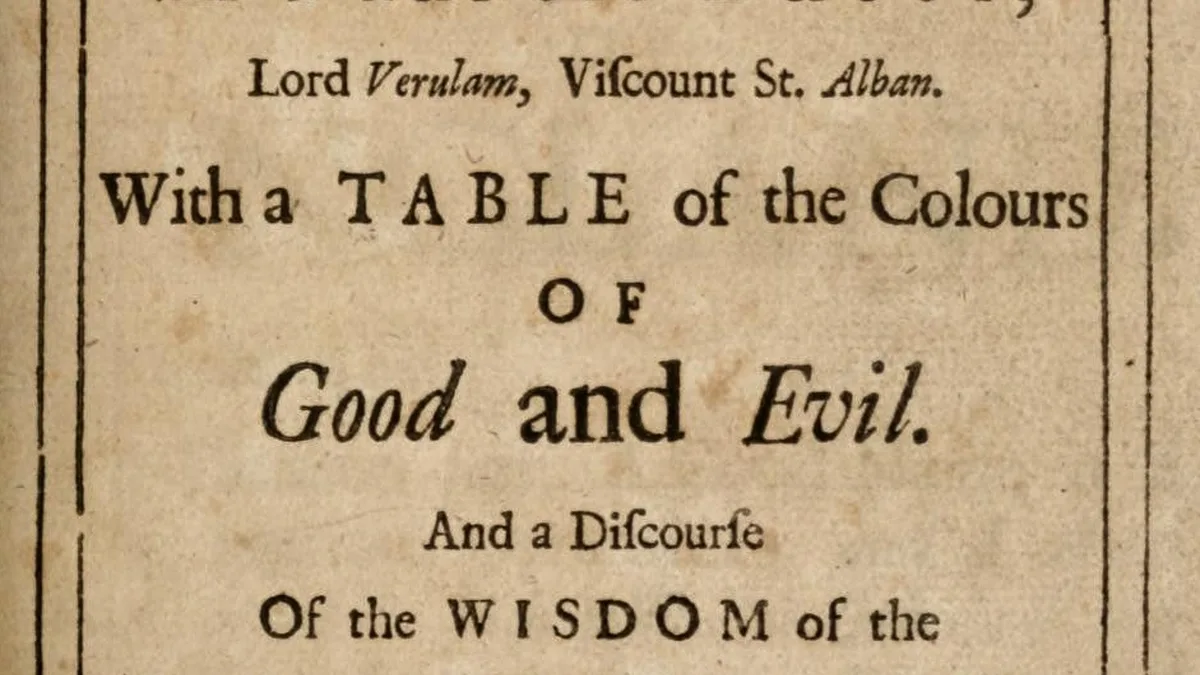
The modern essay as a literary form originates from 16th century France, with the term derived from the French "essai," meaning "attempt" or "trial." The form was pioneered by Michel de Montaigne, who published the first two volumes of his "Essais" in 1580. Montaigne's work established the core premise of the genre: a short prose composition exploring a subject from a personal, often informal, perspective. The form was adopted and adapted in England in the late 16th and early 17th centuries by writers such as Sir Francis Bacon, whose more aphoristic and formal essays were published in collections starting in 1597. The essay proliferated across Europe during the Enlightenment, becoming a primary vehicle for philosophical, political, and social commentary. Its evolution continued through the Romantic period into the modern era, branching into numerous sub-genres including the personal, critical, descriptive, and narrative essay.
What it is for
The essay serves as a flexible literary form for the exploration of ideas, arguments, observations, and personal reflections in prose. Its primary function is to communicate a specific insight or perspective on a chosen topic, whether concrete or abstract, to a reader. Unlike a formal academic paper, the traditional essay often privileges voice, style, and individual reasoning over exhaustive, impersonal scholarship. It is used to persuade, inform, describe, or narrate, frequently blending these purposes within a single work. The form allows writers to test ideas, work through complex thoughts, and present a structured yet personal engagement with the world. Essays are foundational in education for teaching critical thinking, structured writing, and coherent argumentation.
Best Essays books
"The Essays of Michel de Montaigne" represent the foundational and indispensable text of the genre, available in numerous translations and editions. "Selected Essays" by Francis Bacon offers the seminal English-language counterpoint to Montaigne's inward gaze, focusing on aphoristic wisdom and public themes. "The Collected Essays of George Orwell" compiles masterful examples of the political and descriptive essay, renowned for their clarity and moral force. "Notes of a Native Son" by James Baldwin is a landmark collection blending personal narrative with searing social critique on race in America. "The White Album" by Joan Didion exemplifies the modern personal essay and literary journalism, capturing the fragmentation of culture in the late 20th century. "Consider the Lobster and Other Essays" by David Foster Wallace showcases the contemporary expansion of the form into deep, often footnoted, analysis of modern phenomena.
Best books by Essays
This heading is not applicable as "Essays" is a literary genre or form, not an author or entity that produces books. A list of "best books by Essays" would be identical to a list of the best books *of* essays, which is addressed in the previous section. The genre itself does not author works; individual authors within the genre do. Therefore, notable works are properly attributed to their specific authors, such as Montaigne, Bacon, Orwell, or Baldwin. To avoid redundancy and confusion, this section will instead clarify that the most significant books *within* the essay genre are typically collected volumes of a single author's work or seminal anthologies that define the form across periods.
Overview
An essay is a short piece of nonfiction prose that examines a single subject from the author's point of view. It is characterized by its brevity relative to a treatise or dissertation, though its length can vary widely from a few pages to a short book. The structure typically includes an introduction that presents the topic, a body that develops the argument or exploration, and a conclusion that synthesizes the insights. Essays employ a wide spectrum of tones, from the intimate and conversational to the rigorously formal and polemical. Key elements include a clear thesis or central question, supporting evidence or examples, and a coherent progression of ideas. The genre's immense variety encompasses the formal, the informal, the personal, the critical, the descriptive, and the narrative, often blending these modes.
What to know
The essay is a protean form, resisting strict universal definition but always centered on a writer's attempt to think through a subject for an audience. A successful essay depends more on the quality of thought and clarity of expression than on the grandeur of its subject matter. The personal essay, descended from Montaigne, explicitly incorporates the writer's self, experiences, and doubts as part of the inquiry. The formal essay, following Bacon's model, is more objective, structured, and often instructional. Most essays published today, including in magazines and literary journals, fall somewhere on the spectrum between these two poles. Understanding the intended publication and audience is crucial, as a scholarly essay differs substantially in style and convention from a magazine feature or a personal blog post.
Common questions
A common question is what distinguishes an essay from an article, with the latter typically being more reportorial and objective while the essay emphasizes personal perspective and literary style. Readers often ask about the difference between a narrative essay and a short story, the key being that an essay is rooted in factual truth and authorial reflection, not fictional invention. Many wonder about the ideal length for an essay, which has no fixed answer but is generally between 1,500 and 7,000 words for most published works. A frequent inquiry concerns how to start writing an essay, which usually begins with a question or observation that genuinely puzzles or interests the writer. People also ask about the necessity of a formal thesis statement, which is more rigidly required in academic contexts than in literary or personal essays. Finally, readers question how to find good contemporary essays, which are regularly published in periodicals like *The New Yorker*, *The Atlantic*, *Harper's*, and *The Paris Review*.
Pros and cons
A primary advantage of the essay is its accessibility and flexibility, allowing writers to engage deeply with a topic without the commitment of a full-length book. The form encourages intellectual curiosity and can turn a mundane observation into a profound exploration. However, a significant drawback is the potential for superficiality when complex subjects are treated too briefly, leading to oversimplification. Writers often regret choosing the essay form for a topic that requires sustained, systematic argumentation and extensive evidence, which is better suited to a monograph. A common mistake is a lack of focus, where the essay meanders without a clear through-line or purpose, frustrating the reader. The personal essay carries the specific risk of veering into self-indulgence or unexamined confession without achieving broader resonance or insight.
Who it suits
The essay form particularly suits writers who are natural observers, thinkers, and synthesizers, able to draw connections between personal experience and larger ideas. It is ideal for intellectuals, critics, journalists, and storytellers who prefer working at a manageable scale to produce self-contained works. Readers who enjoy the essay are typically curious, appreciate well-crafted prose, and seek a direct engagement with an author's mind. The form suits academic settings for teaching fundamental composition skills, but it also thrives in literary and journalistic contexts for cultural commentary. It is less suited to writers who require the expansive canvas of a novel or the rigorous, impersonal structure of a scientific paper. Ultimately, the essay suits anyone with a distinct voice and a desire to make sense of the world, one attempt at a time.
Latest Essays news
Latest reporting

Lit Hub's September 2026 literary essays and reviews
Lit Hub Daily's September 24, 2026 edition offered a seasonal book selection flowchart and advice for writers, alongside essays on legacy, craft, and...

August 18, 2026: New Releases, Author Insights, and Literary Reflections
Today's literary highlights include new book releases, author interviews, and essays exploring themes from grief to AI's impact on writing. Edwidge...