
Reading Orders For Series
| Series type | Chronological, publication order, or narrative grouping |
|---|
Origin and history
The concept of reading orders for series originated in the late 20th century, primarily within English-speaking online literary communities. Its development is directly tied to the rise of the internet and digital forums in the 1990s, which allowed readers to congregate and share information on a large scale. Before this, readers typically relied on publication dates listed on a book's copyright page or on the numbered spines of mass-market paperbacks to determine sequence. The increasing complexity of fictional series, including prequels, interquel novellas, and sprawling multi-series universes, created a need for more nuanced guidance. Fan-created websites and early web portals dedicated to specific authors or genres began compiling and debating chronological versus publication-order lists to assist fellow readers. This practice solidified in the early 2000s with the establishment of dedicated wiki platforms and book-focused social media sites, where maintaining reading order guides became a standard communal resource.
What it is for
A reading order for a series is a structured list that dictates the sequence in which to read the books within an interconnected fictional universe. Its primary function is to preserve narrative coherence, ensuring that plot developments, character introductions, and major revelations are encountered in an intended or logical manner. It serves to clarify the relationship between core novels, supplemental short stories, companion novellas, and crossover events that may be published out of chronological sequence. This tool is particularly vital for navigating expansive franchises where the author has written stories that jump backwards or forwards in the internal timeline of the world. It also helps readers distinguish between different sub-series or character arcs within a larger meta-series, providing a roadmap for completion. Furthermore, a reading order acts as a discovery aid, preventing readers from missing crucial installments published in anthologies or special editions that are not obviously part of the main sequence.
Pros and cons
A significant pro of following a dedicated reading order is the enhancement of the reading experience through optimal plot comprehension and emotional payoff, as twists and character development are encountered as designed. It can prevent considerable confusion in complex worlds, saving readers from spoiling major reveals or encountering references to events they have not yet read about. Conversely, a primary con is that slavish adherence to a rigid order, particularly a chronological one, can sometimes disrupt the narrative pacing and thematic reveals the author originally constructed through publication order. Readers may regret choosing a fan-created "ultimate" order that incorporates every minor tale, as this can lead to burnout and interrupt the momentum of the core story with tangential material. A common mistake is assuming there is one universally correct order, when in fact the best path can be subjective and may depend on whether a reader prioritizes internal timeline consistency or the author's evolutionary storytelling journey. Furthermore, overly complex orders can become a logistical hurdle, making it difficult to obtain all necessary texts, especially obscure short stories, which can turn leisure reading into a frustrating chore.
Who it suits
This resource suits new readers embarking on a long-running, complex series for the first time, who wish to avoid narrative confusion and ensure they do not miss foundational entries. It is particularly valuable for fans of epic fantasy, expansive science fiction, superhero comics, and mystery series with long-running character arcs, where the internal chronology is frequently expanded upon retrospectively. Completionist readers, who derive satisfaction from experiencing every piece of a fictional universe in a systematic way, will find reading orders indispensable for tracking their progress. It also benefits readers returning to a series after a long hiatus, providing a structured way to re-enter the world and recall where they left off in the broader narrative. Analytical readers who enjoy dissecting plot construction and timeline intricacies often use these orders as a reference point for their own studies and discussions. However, it is less suited to casual readers who prefer simplicity or those who intentionally enjoy the serendipity and unique perspective that comes from reading series installments in a non-standard sequence.
Latest Reading Orders For Series news
Latest reporting
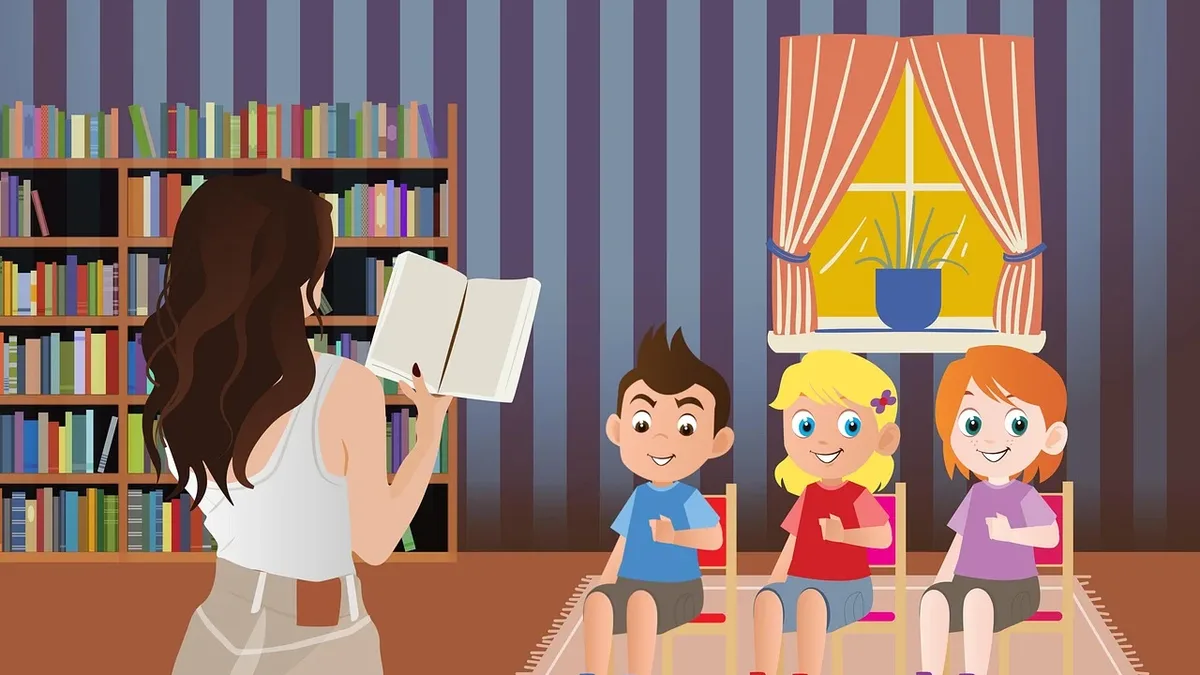
McDonald's France Launches Storyteller School for Parents
McDonald's France has launched L'École des Raconteurs, an initiative to coach parents on reading aloud to children.
Sciences Humaines and Philosophy Magazine Launch 'MàJ' Book
Sciences Humaines Editions and Philosophy magazine have jointly launched a new book series called 'MàJ' to address generational misunderstandings.
Open Books 2026 Sets Frankfurt Reading Festival
The 18th Open Books festival will run from October 6-10 alongside the Frankfurt Book Fair, featuring 200 authors in 144 free events.
Les Presses des Ponts Launches 'Problèmes Publics' Book
Les Presses des Ponts has launched a new book series, 'Problèmes Publics,' aiming to bridge engineering and social sciences.
Anita Brookner's 1982 Office Portraits Revisited
Ben Campbell examines a series of previously unpublished photographs of novelist Anita Brookner, taken by his father for the London Review of Books...

Lefebvre Dalloz Launches LISONS!
Lefebvre Dalloz launches a campaign to promote reading among law students