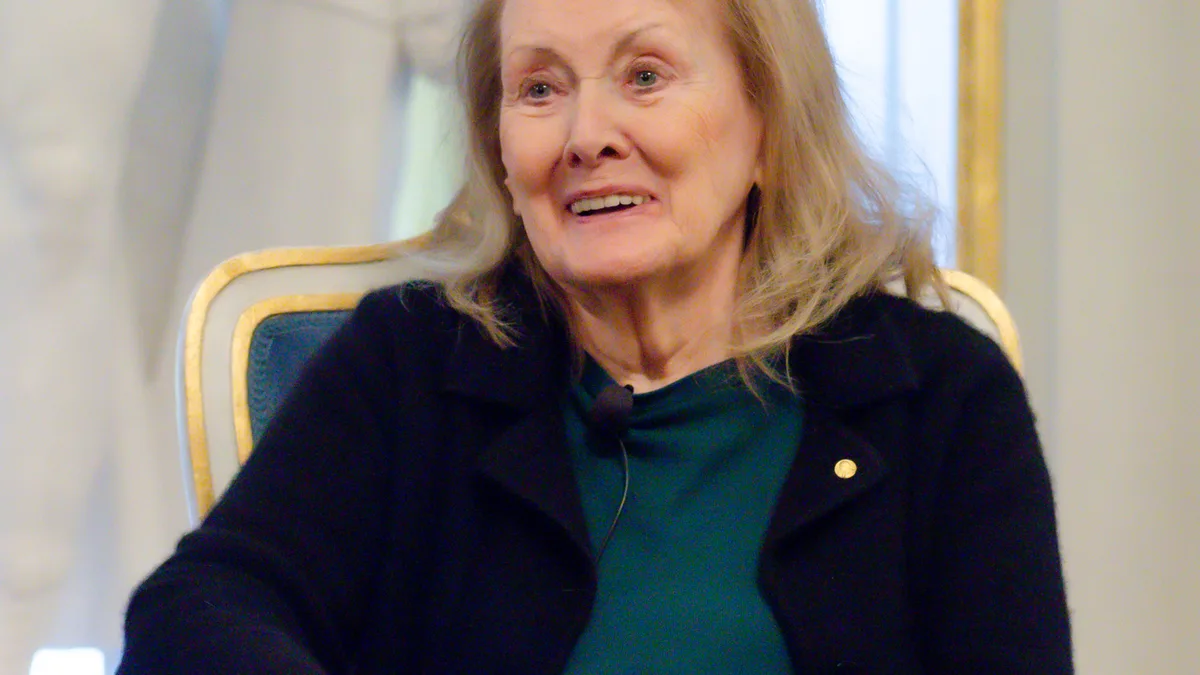
Annie Ernaux The Years
| Author | Annie Ernaux |
|---|---|
| Country of origin | France |
| First published | 2008 |
| Original language | French |
| Genre | Autobiographical novel / Collective memoir |
| Publisher (original) | Éditions Gallimard |
| English translation | Alison L. Strayer (published 2017) |
| Major awards | Prix Renaudot (2008), shortlisted for the International Booker Prize (2019) |
Origin and history
Annie Ernaux's *The Years* originates from France and was first published there in 2008. The work represents the culmination of a literary project that Ernaux had been developing over several decades, synthesizing her unique approach to autobiographical writing. It was written during the first decade of the 21st century, drawing upon a lifetime of personal archives, diaries, and photographs. The book is deeply rooted in the specific social and political history of post-war France, from the late 1940s through the early 2000s. Its creation was influenced by Ernaux's earlier works, which pioneered a form of "impersonal autobiography" focusing on collective experience. The historical scope of the narrative required a meticulous reconstruction of cultural change, using both memory and documented ephemera from the era.
What it is for
*The Years* serves as a collective autobiography, using the author's personal memories to document the evolution of French society over six decades. Its primary function is to capture the sensations, languages, and objects of a passing era, preserving them from oblivion. The book is designed to examine how individual identity is shaped by the larger currents of history, politics, and popular culture. It provides a framework for understanding the interplay between personal recollection and shared generational experience. The narrative seeks to objectify the self, treating the author's life as a case study through which to analyze broader social transformations. Furthermore, it acts as a literary archive, compiling the slogans, advertisements, and mundane events that define a particular historical moment.
Pros and cons
A significant advantage of *The Years* is its innovative narrative voice, which merges the personal "I" with a collective "we," creating a powerful sense of generational testimony. The book's meticulous attention to the material culture of daily life offers an unparalleled sociological record of late 20th-century France. However, a common critique is that its deliberate avoidance of traditional plot and character development can make the reading experience feel fragmented or impersonal for some readers. Those seeking a conventional, emotionally intimate memoir may regret choosing it, as the author's method systematically distances private emotion in favor of sociological observation. The prose's rhythmic, almost incantatory style, while praised by many, can also be perceived as repetitive or overwhelming over the book's full length. A frequent mistake is approaching the text as a simple linear memoir rather than as a constructed literary and historical project.
Who it suits
This book suits readers with a strong interest in modern French history, sociology, and memory studies, as it provides a dense tapestry of social change. It is well-suited to those who appreciate experimental autobiographical forms and literary hybridity, blending essay, chronicle, and memoir. Academics and students of contemporary literature will find it a seminal text in the study of autofiction and life writing. The book also appeals to readers who enjoy piecing together cultural history from the fragments of everyday life, such as popular songs, political events, and consumer goods. It is particularly resonant for individuals who themselves lived through the latter half of the 20th century in the West, offering a mirror to collective experience. Finally, it suits readers who prefer intellectual and philosophical reflection over narrative drama, as its primary momentum comes from the analysis of time's passage.