Susan Farrell on Dresden in Vonnegut's Work
Scholar Susan Farrell analyzes the historical reality of Dresden that Kurt Vonnegut encountered as a prisoner of war, contrasting it with the city's portrayal in fiction.
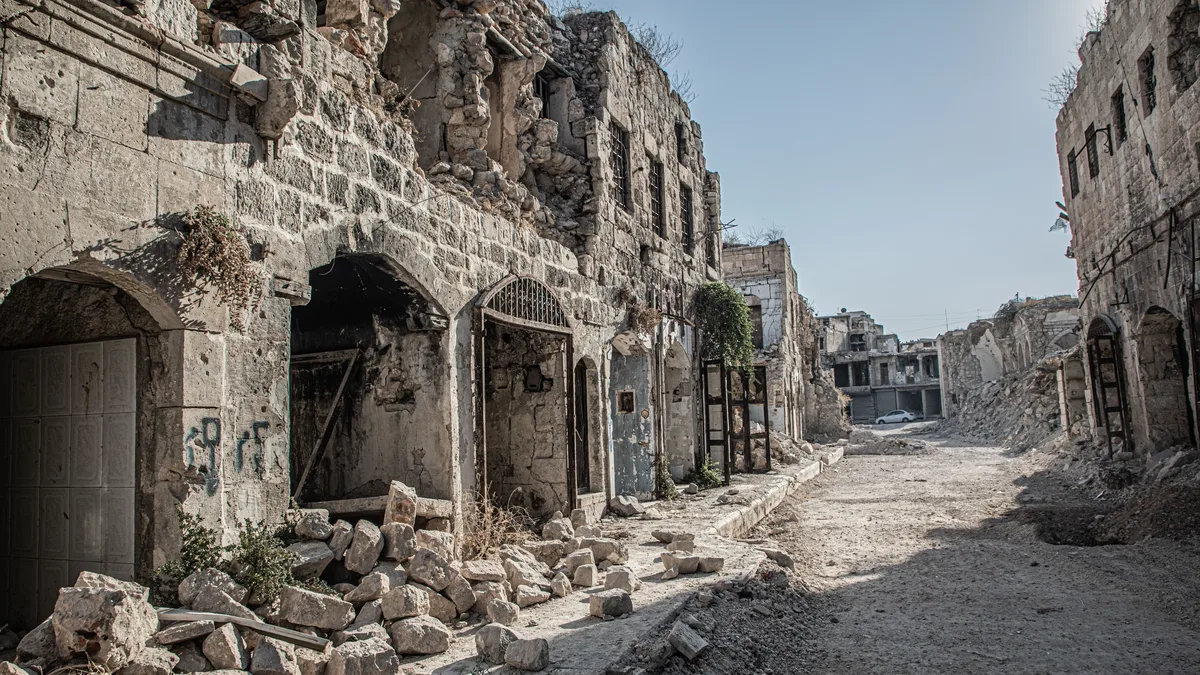
Scholar Susan Farrell examines the historical Dresden that inspired Kurt Vonnegut's Slaughterhouse-Five, separating the city's factual wartime reality from its fictional portrayal. The source, published on Literary Hub, details the conditions Vonnegut and other American POWs faced upon arriving in early 1945, and challenges the myth of Dresden as an untouched cultural sanctuary.
The Myth of an Innocent City
The notion of Dresden as an innocent city, devoted strictly to culture and the arts, is a myth. While it was a beautiful cultural center, its factories were deeply involved in the war effort. Companies that once made luxury goods like cameras, cigarettes, and sewing machines had been converted. Camera lens makers focused on bomb sights. Cigarette machines produced bullets. By 1944, the city contained many factories manufacturing war material, and most Dresdeners worked in war industries.
Even a famous artist's colony had ceased making furniture, instead building wooden tail assemblies for planes. Its Festival Hall had become an SS barracks. The city was also a hub for refugees and foreign laborers, with thousands of refugees housed at the central railway station by early 1945. The city's population was acutely aware of the war.
Dresden Before the Firestorm
Contrary to the idea it was untouched, Dresden had already suffered Allied bombing raids before the major attack in February 1945. An American raid in October 1944 killed hundreds. Another in January 1945 damaged a wide area and killed hundreds more. This bombing created cleanup work for some of the newly arrived American POWs, including those from Vonnegut's division.
The city's population was acutely aware of the war. Refugees brought harrowing tales of Soviet atrocities from the east. Dresden's own Jewish population had been largely deported to camps. The draft age had been lowered to sixteen and raised to fifty, taking more men from their families.
The Prisoners' First Impressions
American prisoners exiting boxcars saw a deceptively peaceful scene. One prisoner recalled Dresden as a beautiful place, with magnificent buildings. Another agreed, remembering it as a nice, pretty city with civilians walking around. This matched Vonnegut's description in the novel, where the skyline looked like a Sunday school picture of Heaven to Billy Pilgrim.
This illusion soon shattered. The men were marched to a former slaughterhouse on the Elbe River, their prison. They were housed in a converted livestock pen, sleeping in crowded double-decker bunks. Subsisting on starvation rations, they worked twelve-hour days and returned to freezing barracks. Life was more grueling than in their previous camp.
Work in the Malt Factory
One prisoner was among fifteen, including Vonnegut, assigned to work at a malt factory. The factory primarily produced an ersatz coffee made of roasted grain, sugar beet shavings, and chicory. The job involved physical labor like unloading boxcars and operating a bagging machine. The factory still produced a small amount of its pre-war product: sweet malt syrup.
German civilian women did most of the syrup work. They would sometimes turn their backs so the prisoners, who had hidden spoons, could steal some. In the novel, Billy Pilgrim creates a gooey lollipop from the hot syrup. The prisoner recalled getting caught by a foreman; he escaped with a severe tongue-lashing instead of a beating.
Terror wasn't the only weapon used against the prisoners. The source notes the Nazis also used propaganda. Vonnegut writes of an interesting visitor who urged the men to join a German army unit two days before the firebombing.