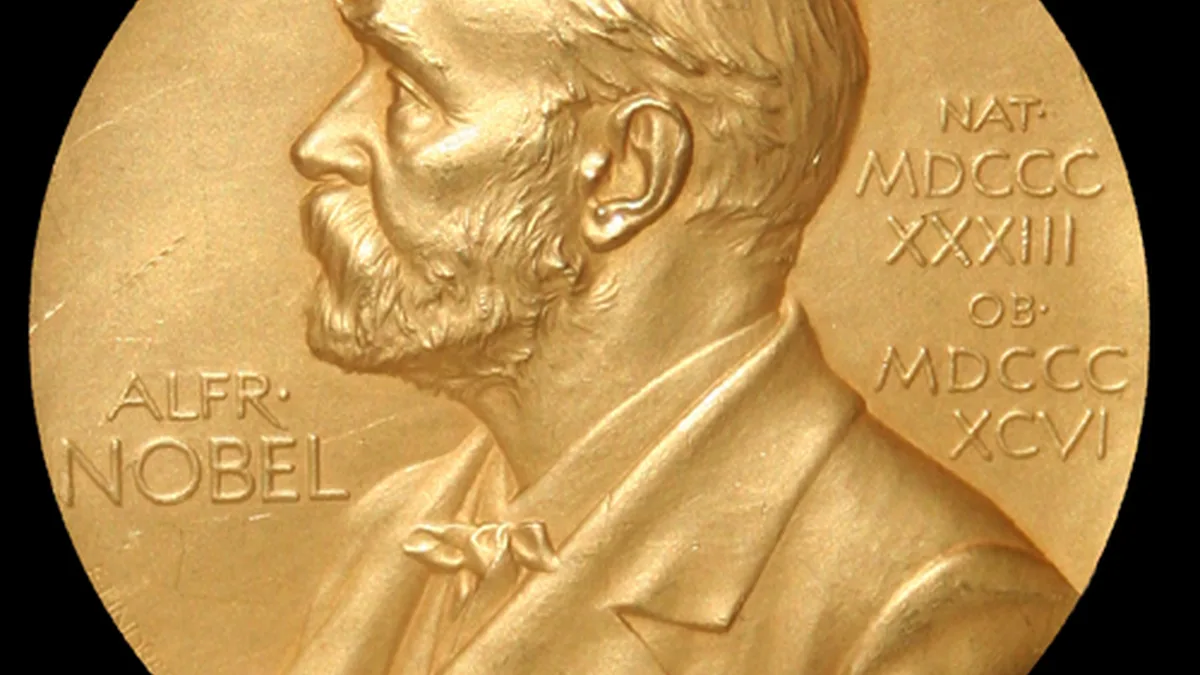
Nobel Prize In Literature
| Author (Year) | Alfred Nobel (Swedish chemist and inventor) |
|---|---|
| First awarded | 1901 |
| Awarding institution | The Swedish Academy |
| Frequency | Annually |
Origin and history
The Nobel Prize in Literature originates from Sweden and was established in the final decade of the 19th century. It is one of the five original prizes stipulated in the will of Alfred Nobel, a Swedish inventor and industrialist, signed in 1895. The first Nobel Prize in Literature was awarded in 1901, following the establishment of the Nobel Foundation to manage the estate and execute the will's provisions. The prize is administered by the Swedish Academy, which was tasked with this responsibility as outlined in Nobel's testament. The history of the prize is marked by its continuous annual awards, with few exceptions primarily during the World Wars. Its origins are intrinsically linked to Nobel's desire to reward those who have conferred the "greatest benefit on mankind" through literary work.
What it is for
The Nobel Prize in Literature is awarded to an author who has produced "the most outstanding work in an ideal direction," as per Alfred Nobel's will. It specifically recognizes a writer's entire body of work, rather than a single book, for its contribution to literature. The prize aims to honor authors whose writing demonstrates exceptional artistic and intellectual merit. The Swedish Academy interprets "in an ideal direction" broadly, often rewarding work that explores profound human experiences, advances literary form, or engages with significant philosophical and social themes. It serves as a lifetime achievement award, cementing an author's status within the global literary canon. The prize also functions to bring international attention to literary traditions and languages that may be less prominent on the world stage.
Pros and cons
A significant pro of the Nobel Prize in Literature is the immense global recognition and prestige it confers upon the laureate, often leading to a substantial increase in the worldwide readership and translation of their works. The substantial monetary award provides financial security and independence for the author. However, a notable con is the intense public scrutiny and criticism the Swedish Academy faces for its selections, with frequent accusations of Eurocentric bias, political motivations, or overlooking major literary figures. Laureates themselves can experience a burden of expectation and a distortion of their literary legacy, as the prize can overshadow their individual works with its monumental reputation. A common mistake is for readers to view the prize as an objective, definitive ranking of literary quality, when it is inherently shaped by the specific tastes and perspectives of the Academy's members. Some laureates and observers regret the way the prize can inadvertently politicize an author's work or reduce a complex oeuvre to a simplified narrative.
Who it suits
The Nobel Prize in Literature suits authors with a substantial and consistently high-quality body of work that has demonstrably influenced the literary landscape. It typically rewards writers who have explored themes of universal human significance, often with a distinctive and innovative stylistic approach. The prize is well-suited to authors whose work transcends national boundaries, either through its subject matter or through translation, achieving international resonance. It also suits poets, playwrights, and non-fiction writers of literary merit, not solely novelists, as the mandate is broad. The award is particularly impactful for authors writing in less widely spoken languages, as it can catalyze global publishing interest and translation projects. It is ultimately suited to those whose literary production aligns with the Swedish Academy's interpretation of Alfred Nobel's idealistic, though ambiguous, criterion of conferring the "greatest benefit on mankind."
Latest Nobel Prize In Literature news
Latest reporting

Can Xue and Anne Carson lead 2026 Nobel Prize in Literature odds
Chinese experimental writer Can Xue and Canadian poet Anne Carson are the front-runners for the 2026 Nobel Prize in Literature, according to the...

Goldsmiths Prize 2024 Shortlist Names Six Experimental Authors
Six authors, including Missouri Williams, China Miéville and Polly Barton, are in contention for the £10,000 Goldsmiths Prize.

Karim Kattan's Eden at Dawn is a National Book Award Finalist
Karim Kattan's French novel Eden at Dawn, translated by Jeffrey Zuckerman, is a finalist for the National Book Award for Translated Literature.
Mois de l'Imaginaire Celebrates 10th Edition
The 10th edition of the Mois de l'Imaginaire, a month-long promotion of science fiction, fantasy, and fantastic literature, launched in Paris.

Planeta and Madrina Sévigné Launch Spanish Literature Push
Two publishing ventures, the global giant Planeta and the new independent house Madrina Sévigné, have simultaneously announced plans to publish...

National Book Awards 2026 Longlists Announced
The National Book Foundation has revealed the longlists for the 2026 National Book Awards in Translated Literature and Young People's Literature.