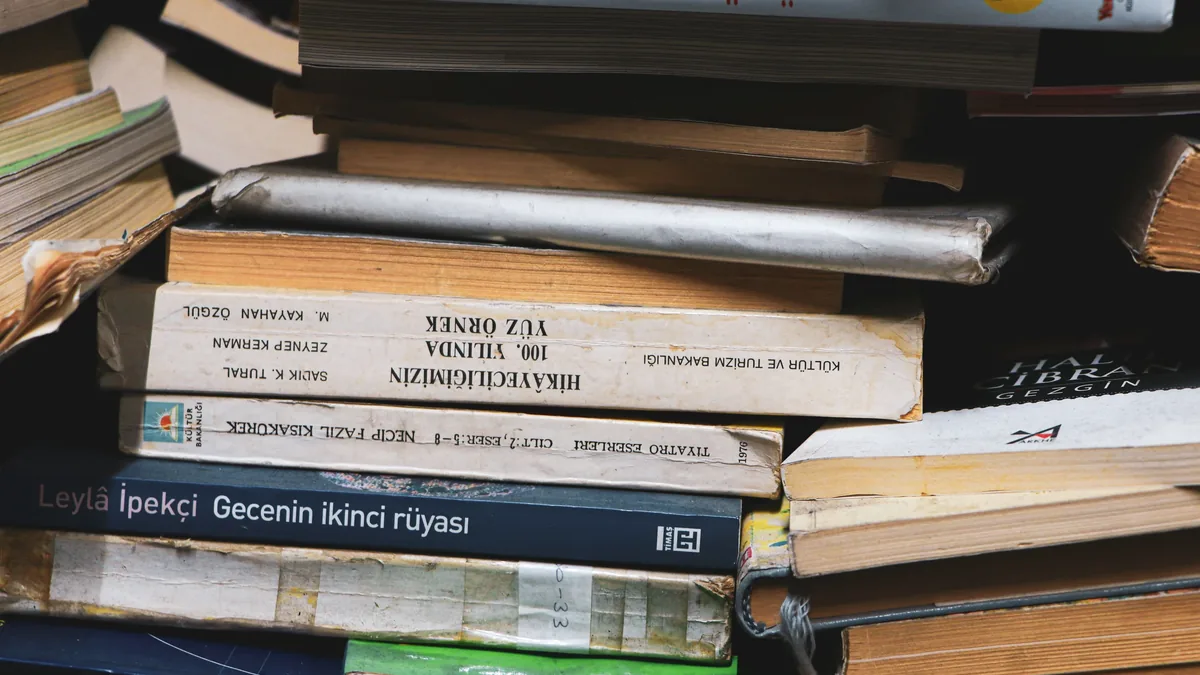
Bilingual And Dual Language Editions
Origin and history
The concept of bilingual and dual-language editions of books has a long history tied to scholarly and pedagogical traditions. Its origins are not tied to a single country but emerged from the practice of publishing parallel texts for the study of classical and sacred languages in Europe. Throughout the medieval and Renaissance periods, scholars produced manuscripts and early printed works with Latin alongside a vernacular language for educational and religious dissemination. The modern trade publication of such editions for literary works and poetry began to solidify in the 19th century, often for the study of Greek and Latin classics. The 20th century saw a significant expansion of the format, particularly after the mid-century, driven by increased academic interest in language learning and comparative literature. Publishers began systematically producing parallel text editions of modern poetry and fiction, making works accessible to students and enthusiasts without full fluency.
What it is for
Bilingual and dual-language editions serve the primary function of allowing direct comparison between a source text and its translation on facing pages or in adjacent columns. They are fundamental tools for serious language learners who wish to study vocabulary, syntax, and idiomatic usage in a real literary context. These editions provide invaluable access to the original linguistic texture, rhythm, and tone of a work for readers who may not be fully conversant in the source language. Scholars and translators use them to analyze translation choices and interpretative decisions made by the translator. They also preserve the original work alongside its translation, acting as a permanent record of both texts for bibliographic purposes. For poetry, in particular, the format is crucial for appreciating formal elements like meter, rhyme, and line breaks that are often altered or lost in a standalone translation.
Best Bilingual And Dual Language Editions books
Notable examples of highly-regarded bilingual series include the Penguin Parallel Text series, which covers short stories and novels in multiple European languages. The Loeb Classical Library, founded in the early 20th century, is a seminal series presenting Greek and Latin texts with facing English translations. The Bibliothèque de la Pléiade occasionally publishes bilingual volumes of major authors for the French and English markets. For poetry, the FSG Book of Twentieth-Century Italian Poetry and the Norton Critical Editions of Dante's *Divine Comedy* are respected facing-text volumes. The Everyman's Library Pocket Poets series includes several bilingual titles, such as their editions of Rilke or Neruda. University presses, like Oxford or Cambridge, often publish authoritative bilingual editions of canonical works as part of their scholarly catalog.
Best books for Bilingual And Dual Language Editions
The format is exceptionally well-suited to poetry collections, where the condensation of language and formal constraints make the comparison most illuminating, as seen in editions of Pablo Neruda, Rainer Maria Rilke, or Charles Baudelaire. Short story anthologies are also common and effective, as they offer manageable, self-contained units for study, such as in collections of Latin American or Russian stories. Philosophical or religious texts where precise terminology is critical, like Plato's dialogues or portions of the Bible, are frequently published in this format. Classic plays, especially those in verse like the works of Molière or Goethe, benefit from the direct line-by-line comparison the layout allows. For language learners, graded readers or simplified texts published in a dual-language format provide structured pedagogical material. Dense, allusive prose works, such as those by Jorge Luis Borges, are often published bilingually to aid readers in navigating the original's specific wording.
Overview
A bilingual or dual-language edition is a volume that presents a text in its original language and a translation into another language, typically arranged on facing pages. The left page usually holds the source text, while the right page presents the translation, though this convention can vary. The edition requires careful typesetting and layout to ensure corresponding passages align as closely as possible across the gutter of the book. These editions almost always include a translator's note or introduction discussing the particular challenges of the work and the principles guiding the translation. They are distinct from books that simply include a translation in an appendix or from multilingual anthologies where works in different languages are not direct counterparts. The production of such an edition is a collaborative effort involving the publisher, the translator, and often a scholarly editor to ensure textual accuracy for both versions.
What to know
The quality of the translation in a bilingual edition is paramount, as a poor translation undermines the utility of the comparison; seeking editions from reputable literary translators or academic presses is advisable. The editorial choice of which original text version to use can be significant, especially for older works with multiple manuscript variants, and this should be noted in the edition's preface. Not all bilingual editions are intended for beginners; some assume a high level of linguistic or literary sophistication from the reader. The physical book's binding and paper quality are practical considerations, as these books are often used for intensive study and frequent page-turning. Some series prioritize literal, word-for-word alignment to aid language learning, while others prioritize literary quality in the translation, which can lead to greater divergence in line or paragraph breaks. The ISBN for a bilingual edition is specific to that language pairing; the same work in a solo translation or a different language pair will have a separate ISBN.
Common questions
A common question is whether these editions are suitable for complete beginners in a language, and the answer is often that they are more beneficial for intermediate to advanced learners who possess a basic grammatical framework. Readers frequently ask how to use the book effectively, with common advice being to read the translation first for comprehension, then work through the original text with the translation as a guide. People wonder about the difference between 'bilingual' and 'dual-language' as terms, and in publishing they are generally used interchangeably to describe this specific facing-page format. Many inquire if audiobook versions exist in a parallel format, which is exceptionally rare due to the linear nature of audio, though some educational materials may alternate readings. A frequent concern is whether reading the translation "spoils" the experience of the original, but the format is designed to enhance understanding rather than replace engagement with the source text. Users also ask about the availability of editions for less commonly taught languages, which is more limited and often dependent on specialized academic publishers rather than large trade houses.
Pros and cons
The format actively builds language comprehension and vocabulary in context, which is more engaging than studying from a textbook or dictionary alone. It can deepen literary analysis by making the translator's art visible, turning reading into a comparative critical exercise. A significant drawback is that the constant eye movement between pages can disrupt reading flow and make it difficult to experience either version as a coherent, immersive narrative. The physical layout sometimes forces awkward compromises, such as leaving excessive white space or causing sentences to break across pages in non-corresponding ways. Readers with even moderate proficiency in the source language may find themselves overly reliant on the translation, potentially hindering the development of independent reading skills, and those seeking pure literary enjoyment often find the format too academic and interruptive.
Who it suits
This format ideally suits intermediate to advanced students of a language who have moved beyond basic grammar and seek to expand their vocabulary and stylistic understanding through authentic literature. It is highly suitable for literary scholars, critics, and translators who require precise, side-by-side analysis of text and translation for professional or research purposes. Serious readers of poetry, where the marriage of form and content is essential, benefit greatly from the ability to reference the original's structure and sonic qualities. Autodidacts and lifelong learners interested in comparative linguistics or literature often find these editions a rewarding resource for self-directed study. The format is less suited to absolute beginners in a language, who may find the original text overwhelmingly difficult without sufficient foundational knowledge. It is also generally not the best choice for a reader seeking uninterrupted narrative pleasure or a first introduction to a foreign author, where a skilled standalone translation is usually preferable.
Latest Bilingual And Dual Language Editions news
Latest reporting
Sciences Humaines and Philosophy Magazine Launch 'MàJ' Book
Sciences Humaines Editions and Philosophy magazine have jointly launched a new book series called 'MàJ' to address generational misunderstandings.
Agents Predict Trends at Frankfurt Book Fair 2026
Literary agents at the Frankfurt Book Fair highlight rising interest in horror, traditional space opera, and fiction from smaller language markets...
R.F. Kuang on Diaspora, Language and Shame in 'Taipei Story'
Author R.F. Kuang discusses her new novel 'Taipei Story' with LitHub, exploring themes of language acquisition, diaspora identity, and the productive...
Prix Vendredi 2026 shortlist reveals ten
The jury for the tenth Prix Vendredi has selected ten French-language books for readers aged 13-18. The winner, to be announced on November 12, will...
Benkos Biohó Monument's Contradictions Questioned
An article examines a monument to the maroon leader Benkos Biohó in San Basilio de Palenque, Colombia, questioning its representation of freedom...
The Maltese Version
A couple's relationship is put to the test as one partner considers taking a job that would leave them apart for a month. The story explores the...