Agents Predict Trends at Frankfurt Book Fair 2026
Literary agents at the Frankfurt Book Fair highlight rising interest in horror, traditional space opera, and fiction from smaller language markets like
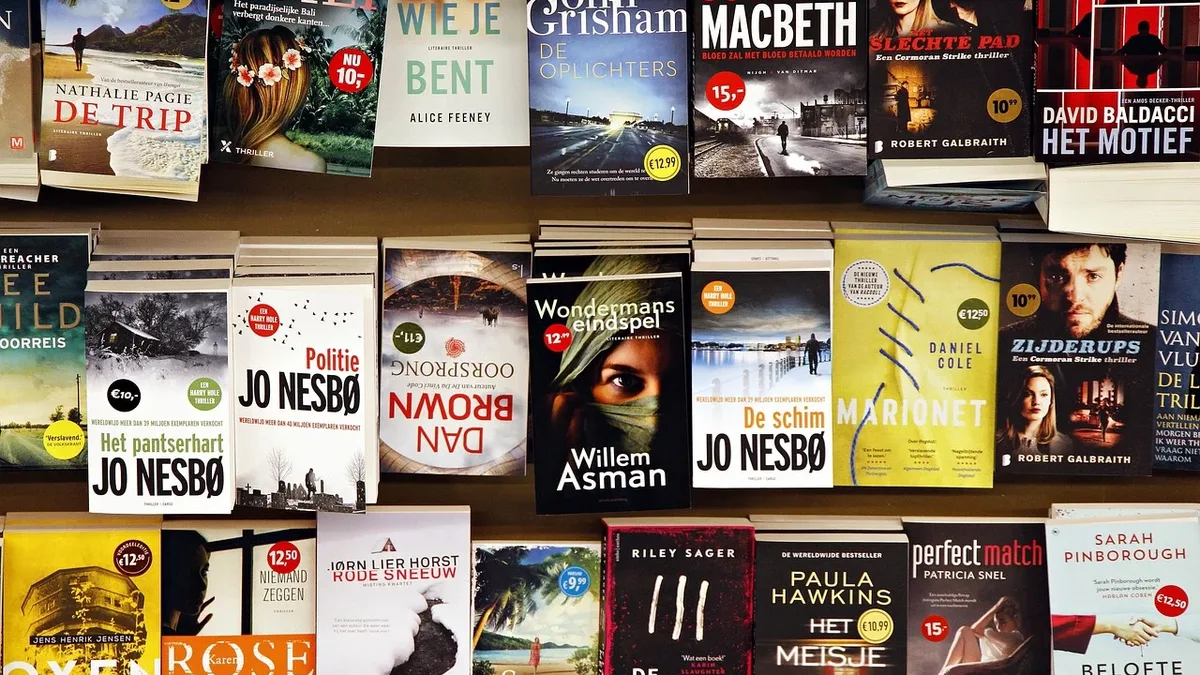
Literary agents report a search for the next major trend at the 2026 Frankfurt Book Fair. According to Publishers Weekly, agents from the U.S. And abroad are gauging interest in genres from horror to sweeping family chronicles.
Nicole Eisenbraun, translation rights manager at Ginger Clark Literary, says publishers are all trying to find the next big thing. She and other agents point to surprise hits like Allen Levi's self-published novel Theo of Golden and Virginia Evans's The Correspondent as examples of what can capture attention.
Horror Gains Broader Appeal
Several agents noted a growing openness to horror beyond its traditional genre audience. Maialie Fitzpatrick, a media rights agent at United Talent Agency, says she is also seeing more television producers seeking out horror books for adaptation. "On the film and TV side, we're seeing it really come back in a specific way," Fitzpatrick notes.
Whether this interest extends to speculative fiction more broadly is uncertain. Liane-Louise Smith of the Blair Partnership in London says editors currently show a preference for sweeping, escapist, classic storytelling, citing Claire Leslie Hall's 2025 novel Broken Country as an example.
A Bet on Traditional Space Opera
Sam Edenborough, rights director at Greyhound Literary, is betting on a resurgence of old-school space operas. He recently sold Immortal Clay, a sweeping science fiction debut by American author Rus McLaughlin, to Orbit U.K. In a two-book preempt.
Edenborough says publishers told him they were really desperate to find new voices for this more traditional science fiction. This surprised him, as he initially believed publishers were not buying debuts in this category.
Spotlight on Smaller Language Markets
Geography is influencing where agents focus their efforts. Ayser Ali, who runs a London agency specializing in Turkish and Balkan authors, is betting on smaller languages with big voices. She points to Bulgaria, highlighted by Georgi Gospodinov's International Booker Prize win in 2023 and again by Rene Karabash's 2026 shortlisted novel She Who Remains.
Ali sees a template in the ascent of Korean literature, which built a whole ecosystem of translated writers. "The talent is there," Ali says of Bulgaria. We just haven't had our big international moment yet, but I think it's coming.
Nonfiction and the AI Question
In nonfiction, agents are scouting for standout big ideas books. Mark Gottlieb, an executive vice president at Trident Media, contends that any concept needs to travel in a sentence to land with publishers. He lists true crime, history, and books that help readers make sense of rapidly changing technology as potentially hot topics.
The specter of AI-generated content is causing industry anxiety. High-profile cancellations of several novels over AI concerns have planted seeds of mistrust. Gottlieb expects greater scrutiny around authorship, copyright, and the use of AI in creating intellectual property.
Sam Edenborough emphasizes that dealmakers have to find ways to build trust and to incentivize authors to behave in a trustworthy way. We need to look after people, he adds, because it's getting really rough out there.