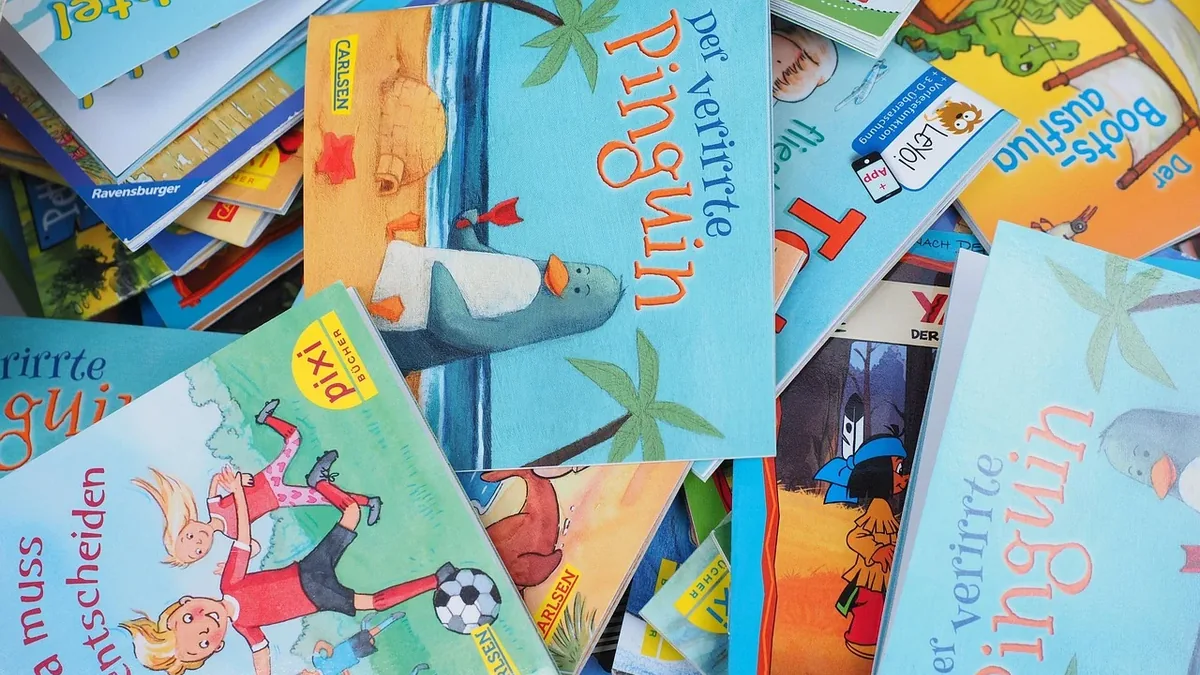
Children'S And Young Adult
| Target age range | Children (approx. 3–12) or Young Adult (approx. 13–18) |
|---|---|
| Primary genre | Fantasy, Contemporary, Science Fiction, Adventure, Mystery |
| Author | Full name |
| Publisher | Name of publishing house |
| First published | Year |
| Original language | Language of first publication |
Origin and history
The category of Children's and Young Adult literature as a distinct publishing field originated in the Western world, primarily in Britain and the United States, during the 18th and 19th centuries. Before this period, stories for young people were largely didactic or were adult stories adapted for a younger audience. The mid-18th century saw the publication of works like John Newbery's "A Little Pretty Pocket-Book," which is often cited as one of the first books published expressly to entertain children. The 19th century brought seminal works from authors like the Brothers Grimm in Germany, Hans Christian Andersen in Denmark, and Lewis Carroll in England, which solidified the concept of literature crafted for a child's imagination. The "Young Adult" designation emerged much later, gaining formal recognition as a marketing and library category in the mid-20th century, notably after the publication of S.E. Hinton's "The Outsiders" in 1967. This established a space for narratives specifically addressing the experiences and concerns of teenagers, distinct from both children's literature and adult fiction.
What it is for
Children's and Young Adult literature serves to provide age-appropriate narratives that entertain, educate, and support the emotional and cognitive development of young readers. For younger children, picture books and early readers help develop language skills, visual literacy, and basic concepts about the world through engaging stories and illustrations. Middle-grade fiction often explores themes of friendship, family, adventure, and initial steps toward independence, providing a safe space to navigate complex social dynamics. Young Adult literature specifically addresses the core concerns of adolescence, including identity formation, social belonging, romantic relationships, and confronting personal and societal challenges. The category also functions as a vital tool for fostering empathy, allowing readers to experience diverse perspectives and situations beyond their own lived reality. Furthermore, it provides a reflective mirror for young people to see their own experiences validated and their questions taken seriously within the pages of a book.
Best Children'S And Young Adult books
Determining a definitive "best" list is subjective, but certain titles are consistently recognized for their lasting impact, literary quality, and popularity. In children's literature, enduring classics include Maurice Sendak's "Where the Wild Things Are," E.B. White's "Charlotte's Web," and C.S. Lewis's "The Chronicles of Narnia" series. For middle-grade readers, landmark books often feature J.K. Rowling's "Harry Potter" series, Madeleine L'Engle's "A Wrinkle in Time," and Louis Sachar's "Holes." In the Young Adult sphere, foundational and acclaimed works encompass S.E. Hinton's "The Outsiders," Lois Lowry's "The Giver," and Mildred D. Taylor's "Roll of Thunder, Hear My Cry." More contemporary standards include John Green's "The Fault in Our Stars," Angie Thomas's "The Hate U Give," and Suzanne Collins's "The Hunger Games" trilogy. These books are frequently noted for their innovative storytelling, emotional resonance, and their ability to define or transform the genre for new generations of readers.
Best books for Children'S And Young Adult
Selecting the best books for a young reader depends heavily on individual age, reading level, and interests, but key benchmarks exist for different developmental stages. For early readers, books by authors like Mo Willems ("Elephant & Piggie" series) and Eric Carle ("The Very Hungry Caterpillar") successfully combine simple, repetitive text with engaging visuals. Chapter book series like "Magic Tree House" by Mary Pope Osborne provide accessible, educational adventures that build reading stamina and confidence. For middle-grade readers seeking complex worlds, Rick Riordan's mythology-based series and Rebecca Stead's character-driven novels like "When You Reach Me" are highly regarded. Young Adult readers often gravitate toward the immersive fantasy of Leigh Bardugo's "Grishaverse" books or the realistic, issue-oriented fiction of Jason Reynolds and Elizabeth Acevedo. Non-fiction also plays a crucial role, with publishers like Scholastic and National Geographic Kids producing high-quality informational texts on history, science, and biography tailored for young audiences.
Overview
Children's and Young Adult (YA) literature is a vast publishing category encompassing all fiction and non-fiction works intentionally created for readers from infancy through late adolescence. It is segmented by the target reader's age and developmental stage, typically divided into board books, picture books, early readers, chapter books, middle-grade, and young adult. The content, themes, vocabulary, and length of the book are deliberately calibrated to match the cognitive, emotional, and social understanding of its intended audience. A key characteristic is the centrality of a young protagonist whose perspective drives the narrative, allowing the reader to experience the story from a relatable viewpoint. The category includes every genre found in adult literature, fantasy, mystery, historical fiction, romance, poetry, biography, but filtered through age-appropriate lenses. It is a dynamic field constantly evolving to reflect contemporary childhood and adolescent experiences, including greater representation of diverse identities and cultures.
What to know
When examining a Children's or Young Adult book for reference, several key pieces of bibliographic data are essential. The publisher is a critical detail, as certain imprints specialize in specific age ranges or genres, such as HarperCollins Children's Books or Penguin Young Readers Group. For translated works, the name of the translator and the original language and title must be recorded to acknowledge the work's origin and journey. The publication date should include the original year of publication in its source language and the year of publication for the specific edition in hand, as reprints and new editions are common. Understanding the recommended age range or grade level, often provided by the publisher or reviewers, helps contextualize the book's intended audience. Additionally, awards and honors, such as the Newbery Medal, Caldecott Medal, or Printz Award, serve as indicators of recognized quality within the field.
Common questions
A frequent question is about the definitive difference between middle-grade and young adult literature, which primarily concerns the protagonist's age, thematic complexity, and narrative voice, with YA typically featuring older teens and more mature content. Readers often ask how to find books appropriate for a child's specific reading level, which can be guided by tools like Lexile measures or guided reading levels provided by educators, though these should complement, not replace, interest-based selection. Many wonder about the importance of graphic novels within the category, which are now widely recognized as legitimate and complex literary works that can be suitable for all age groups within children's and YA. Common inquiries also address how to handle challenging themes like violence, loss, or sexuality in YA books, which experts suggest should be navigated through open discussion rather than avoidance. There is ongoing debate about "crossover" appeal, where books published for young audiences gain massive adult readerships, blurring traditional market boundaries. Finally, questions about censorship and book challenges are prevalent, focusing on what content is deemed suitable and who has the authority to make those decisions for young readers.
Pros and cons
A significant advantage of the Children's and Young Adult category is its dedicated focus on creating accessible, engaging gateways to a lifelong love of reading by meeting young people at their developmental level. The emphasis on relatable young protagonists and clear narrative arcs can make complex themes more digestible and impactful for readers. However, a common con is that the category can sometimes be unfairly dismissed as lesser literature by those unfamiliar with its depth, leading to stigma for both readers and writers. The market-driven segmentation by age can also become overly rigid, potentially causing advanced younger readers to feel constrained or older readers to feel patronized by books in their age bracket. A frequent mistake is assuming all YA literature is issue-driven or dystopian, overlooking the vast diversity of genres and styles within the field. Furthermore, the industry's trend-driven nature can lead to oversaturation of certain themes or genres, making it harder for unique, quieter stories to gain visibility.
Who it suits
Children's literature specifically suits infants, toddlers, and elementary school-aged children, providing the foundational stories, vocabulary, and concepts that support early literacy and emotional development. Middle-grade fiction is ideally suited for readers approximately ages 8 to 12 who are mastering independent reading and exploring stories about peer relationships, adventure, and beginning to understand the wider world. Young Adult literature suits teenagers and older middle-grade readers seeking narratives that grapple with identity, autonomy, social justice, romance, and the transition to adulthood. The category also suits parents, educators, librarians, and caregivers looking for quality materials to recommend, teach, or share with young people in their care. Furthermore, it suits adult readers who appreciate concise, propulsive storytelling with emotional clarity or who are exploring themes of youth and memory. Ultimately, it is a category for anyone who values the specific and powerful experience of seeing the world through the evolving perspective of a young person.
Latest Children'S And Young Adult news
Latest reporting
New Children's Books October 2026 Releases Announced
A slate of ten new children's and young adult books, from board books to YA novels, will be published by major houses in October 2026, featuring

Tomi Adeyemi details trauma of Children of Blood and Bone
Author Tomi Adeyemi has revealed the severe emotional and physical toll of the film adaptation of her novel Children of Blood and Bone, stating she...
Authors Share Cultural Pride in New Children's Books
Four authors discuss their new children's books, which aim to shows Hispanic and Latinx history and culture for young readers during Heritage Month.
World Kid Lit Month 2026 Spotlights Nine New Translations
Words Without Borders marks the 10th World Kid Lit Month with a list of nine newly translated picture books, middle-grade, and young adult titles from
McDonald's France Launches Storyteller School for Parents
McDonald's France has launched L'École des Raconteurs, an initiative to coach parents on reading aloud to children.
National Book Awards 2026 Longlists Announced
The National Book Foundation has revealed the longlists for the 2026 National Book Awards in Translated Literature and Young People's Literature.