
Historical
| Author | Individual or collective name |
|---|---|
| Publisher | Publishing house or imprint |
| Original language | Language of first publication |
| Publication date | Year of first publication |
| Translation | Translator and target language, if applicable |
| Country of origin | Nation of first publication |
Origin and history
The historical genre in literature finds its origins in the ancient and classical traditions of recorded storytelling, with foundational works emerging from regions like Greece, Rome, and China. The modern historical novel, as a distinct form of fiction, is widely established to have been created in the early 19th century, specifically with the publication of Sir Walter Scott's "Waverley" in 1814. This work established the core template of setting a fictional narrative against a meticulously researched backdrop of real historical events and figures. The genre evolved through the 19th century with major contributions from authors like Leo Tolstoy in Russia and James Fenimore Cooper in the United States, reflecting national histories. The 20th century saw further diversification into subgenres like historical mystery and romance, alongside a heightened emphasis on scholarly accuracy and representing marginalized perspectives. Its enduring appeal lies in its ability to use the past as a lens to explore enduring human themes of conflict, society, and identity, making it a persistently significant literary category.
What it is for
The primary purpose of historical fiction is to illuminate the past by blending factual events with narrative invention, thereby making history accessible and emotionally resonant for a general reader. It serves to educate readers about different eras, social structures, and pivotal events in a more engaging manner than a textbook, often sparking further interest in non-fiction study. The genre provides a framework for authors to explore complex themes such as power, justice, love, and survival within the specific constraints and realities of a bygone time period. It allows for the imaginative reconstruction of daily life, material culture, and speech, offering a sensory immersion into worlds that are otherwise inaccessible. Furthermore, historical fiction can give voice to individuals and groups who were omitted from traditional historical records, offering speculative but plausible perspectives from the margins of society. Ultimately, it functions as a dialogue between the past and present, using historical settings to comment on contemporary issues and universal human experiences.
Best Historical books
Determining the "best" historical books involves considering foundational influence, literary merit, and enduring popularity, with certain titles consistently appearing on canonical lists. Sir Walter Scott's "Ivanhoe" remains a landmark for its romanticized depiction of medieval England and its establishment of genre conventions. Leo Tolstoy's "War and Peace" is monumental for its epic scale and profound philosophical exploration of the Napoleonic invasion of Russia, blending real historical figures with fictional families. Hilary Mantel's "Wolf Hall" trilogy, beginning in 2009, is celebrated for its modernist prose and deeply psychological portrait of Thomas Cromwell in Tudor England. Margaret Atwood's "Alias Grace," based on a true 19th-century crime, expertly intertwines historical fact with questions of memory and truth. James Clavell's "Shōgun" provides a vast, immersive introduction to feudal Japanese culture and politics through the eyes of a shipwrecked English sailor. Colson Whitehead's "The Underground Railroad" uses a speculative literalization of the railroad to powerfully re-examine the antebellum South and the legacy of slavery.
Best books for Historical
For readers seeking to understand the craft and context of the historical genre itself, several critical and theoretical works are essential. Georg Lukács's "The Historical Novel," written in the mid-20th century, provides a seminal Marxist analysis of the genre's development and social function, focusing on Scott and his successors. Jerome de Groot's "The Historical Novel" offers a more contemporary and accessible survey of the genre from its origins to postmodern manifestations. Diana Wallace's "The Woman's Historical Novel: British Women Writers, 1900–2000" provides a crucial focused study on gender and the genre. Sarah Johnson's "Historical Fiction: A Guide to the Genre" serves as an invaluable practical resource for librarians and readers, with extensive annotated bibliographies. Margaret Atwood's nonfiction work "In Search of Alias Grace" gives unique insight into the author's own research and creative process for a specific historical novel. Books on research methodology, such as "The Writer's Guide to Everyday Life in Historical Periods," are practical tools for aspiring writers or interested readers wanting to understand the construction of historical authenticity.
Overview
Historical fiction is a literary genre where the plot is set in a time period prior to the author's own, requiring deliberate reconstruction of that era through research. The defining boundary is often a minimum of fifty years before the present, placing the events beyond the author's lived experience and into the realm of studied history. While real events, figures, and social conditions form the backbone of the setting, the central narrative and its main protagonists are typically fictional, allowing for creative exploration within factual confines. The genre demands a balance between authenticity and narrative drive, aiming to avoid anachronisms in language, thought, and material detail while still crafting a compelling story. It encompasses a vast range of subgenres, including historical romance, mystery, thriller, and epic sagas, each prioritizing different elements from the historical backdrop. The reader's expectation is to be transported to another time, gaining both intellectual understanding and emotional connection to the past through the lives of the characters.
What to know
A key consideration is the spectrum of historical accuracy, which ranges from meticulously researched novels that adhere closely to known facts to those that take significant liberties for thematic or narrative purposes. Readers should be aware that even the most rigorous historical fiction involves interpretation and imagination, particularly in dialogue and private moments of real figures, as these are rarely documented. The issue of modern sensibilities is a central tension; authors must decide how to handle period-typical attitudes on race, gender, and class, balancing authenticity with potential alienation of contemporary readers. Research depth varies greatly, and it is advisable to consult an author's note or afterword, which often clarifies what is invented and what is documented, serving as a guide to the novel's relationship with history. The genre is not a substitute for academic history, but rather a complement that can highlight the human dimensions of dry facts and dates. Understanding these parameters allows a reader to better evaluate and appreciate a historical novel's achievements and its chosen approach to the past.
Common questions
A frequently asked question is whether all events and people in a historical novel are real, to which the answer is typically no, as authors invent central characters to navigate the historical landscape without being constrained by the exact record. Readers often ask how much research is required for such books, and the process usually involves extensive study of primary sources, contemporary accounts, academic histories, and material culture specific to the era. Many wonder about the difference between historical fiction and nonfiction narrative history, with the key distinction being that the former prioritizes a crafted plot and character arcs, while the latter is bound to evidence-based exposition and analysis. A common query concerns anachronisms, which are items, ideas, or language out of place in the time period, and authors employ sensitivity readers and expert consultants to minimize these errors. People ask why some authors use modern vernacular in historical dialogue, a stylistic choice aimed at improving accessibility and immediacy, though it remains a subject of debate among purists. Readers also inquire about recommended starting points for the genre, which often leads to suggestions of highly acclaimed and accessible works like "All the Light We Cannot See" or "The Book Thief" that focus on well-known 20th-century events.
Pros and cons
A significant advantage of historical fiction is its power to generate widespread interest in history, making complex periods personally engaging and memorable in a way textbooks often fail to do. The genre's concreteness, depicting specific dress, food, and customs, provides a satisfying sensory immersion that pure fantasy or contemporary fiction may lack. However, a major con is the risk of perpetuating historical inaccuracies or simplistic myths, as readers may absorb the fictional narrative as fact, especially if the author's inventions are not clearly signposted. The research burden can also lead to "information dumping," where the narrative flow is interrupted by excessive detail included merely to demonstrate the author's knowledge. Furthermore, authors face the genuine challenge of making characters relatable without imposing implausibly modern attitudes, often leading to criticism from either side for being too anachronistic or too uncomfortably period-accurate. A common mistake for new readers is selecting a book based on a favorite era without considering the author's style, leading to disappointment with dense, slow-paced scholarly narratives when a faster-paced plot was desired.
Who it suits
This genre particularly suits readers with an inherent curiosity about how people lived in different times and places, who enjoy learning incidentally through a story. It is ideal for those who appreciate substantial, well-developed settings where the environment acts almost as a character itself, shaping the plot and protagonists' choices. Readers who prefer narratives with a sense of high stakes, where personal dramas unfold against the backdrop of wars, plagues, or social revolutions, will find the genre compelling. It also suits individuals interested in ethical and philosophical questions, as historical settings provide clear distance to examine issues like power, morality, and survival without contemporary political baggage. However, it may frustrate readers who prioritize brisk plotting above all, as the need for scene-setting and historical explanation can sometimes slow a story's initial momentum. Ultimately, it is a rewarding genre for patient readers who seek both intellectual enrichment and emotional storytelling, willing to engage with the past on its own complex terms.
Latest Historical news
Latest reporting
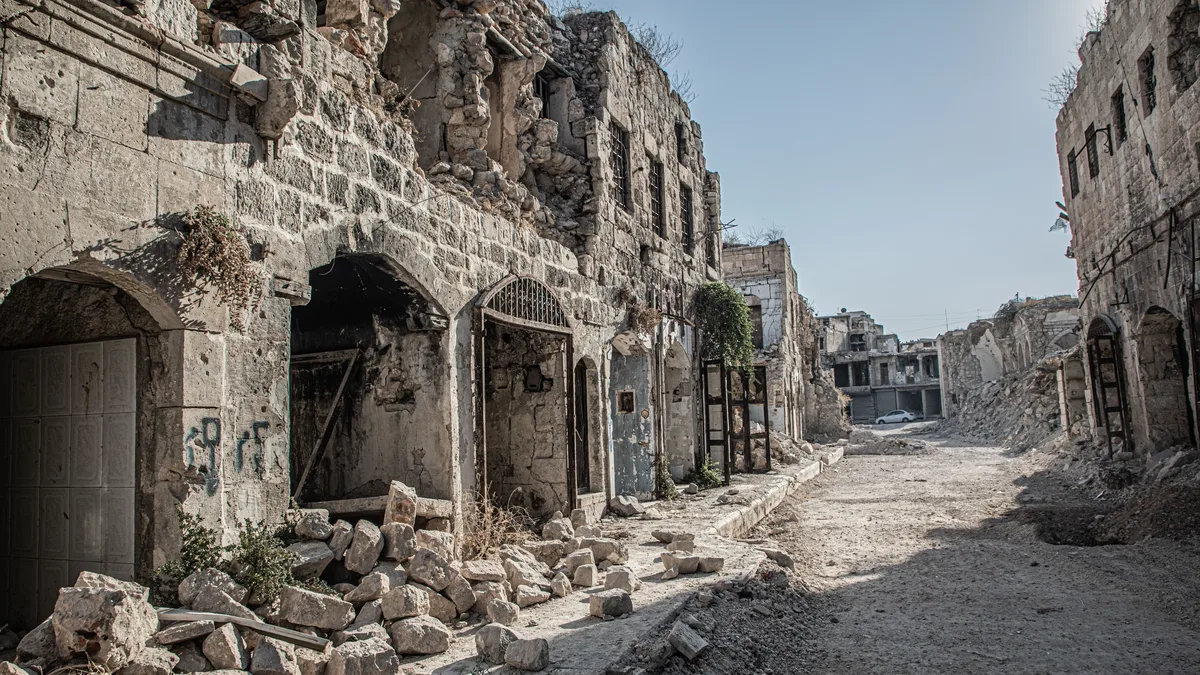
Susan Farrell on Dresden in Vonnegut's Work
Scholar Susan Farrell analyzes the historical reality of Dresden that Kurt Vonnegut encountered as a prisoner of war, contrasting it with the city's...

O'Donnell's Historical Fiction Rules
Author Paraic O'Donnell outlines eight rules for writing historical fiction, using Hilary Mantel's 'Wolf Hall' as a prime example of technical...

Fayard's Mille et Une Nuits Launches French
Fayard's Mille et Une Nuits imprint is launching a new collection of short, affordable books compiling famous quotes from four major French historical