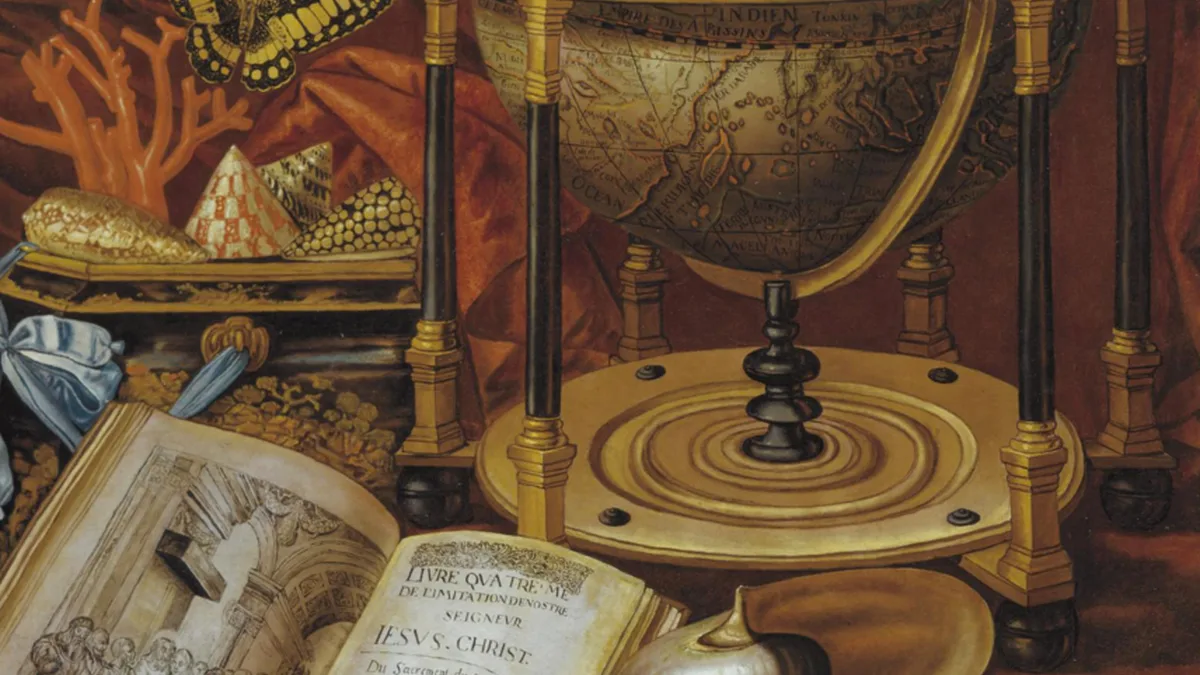
History
| Author | Surname, Forename(s) |
|---|---|
| Publisher | Publisher Name |
| Translator | Surname, Forename(s) (if applicable) |
| Original language | Language name |
| Publication date | Year (e.g., 2024) |
| Edition | Edition identifier (e.g., First Edition, Revised Edition) |
| ISBN | ISBN-13 number |
| Page count | Number of pages |
Origin and history
History as a formal discipline originates from the ancient Mediterranean world, with foundational developments in both Greece and the Near East. The systematic inquiry into past events, distinct from myth or epic poetry, began to take shape in the 5th century BCE with the work of Herodotus of Halicarnassus, often called the "Father of History." His near-contemporary, Thucydides, later in the same century, established a stricter methodological standard of evidence and causal analysis focused on contemporary political and military events. Parallel traditions of historical record-keeping developed independently in ancient China, with the *Spring and Autumn Annals* traditionally attributed to Confucius, and detailed court histories compiled by scribes. The field evolved through medieval chronicles, Renaissance humanist scholarship, and the professionalization of history as an academic discipline in the 19th century at European universities, establishing the critical methods used today.
What it is for
History serves to systematically analyze and interpret past human societies, events, and processes to understand how the present world came to be. It provides a critical framework for examining change and continuity over time across political, social, economic, and cultural dimensions. The discipline develops skills in sourcing, evaluating evidence, and constructing reasoned arguments based on fragmentary and often contradictory information. History fosters an understanding of diverse perspectives, cultures, and experiences, challenging presentist assumptions. It is used to inform public policy, legal decisions, and cultural heritage management by providing context and precedent. Ultimately, history cultivates critical thinking and civic literacy, enabling a more nuanced engagement with contemporary issues.
Best History books
"The History of the Peloponnesian War" by Thucydides remains a foundational text for its rigorous analysis of power, human nature, and the causes of war. "The Mediterranean and the Mediterranean World in the Age of Philip II" by Fernand Braudel exemplifies the Annales School's approach, masterfully integrating geography, long-term social structures, and events. "The Making of the English Working Class" by E.P. Thompson pioneered "history from below," recovering the agency and experiences of ordinary people. "King Leopold's Ghost" by Adam Hochschild is a powerful narrative history that exposed the atrocities of colonial rule in the Congo and its legacy. "Guns, Germs, and Steel" by Jared Diamond presents a sweeping, interdisciplinary thesis on broad patterns of human history, though it is debated by specialists. "A People's History of the United States" by Howard Zinn offers a influential and provocative challenge to traditional national narratives by centering marginalized groups.
Best books for History
"Historians' Fallacies: Toward a Logic of Historical Thought" by David Hackett Fischer is an essential guide to identifying and avoiding common errors in historical reasoning. "The Practice of History" by Geoffrey Elton provides a clear, forthright argument for a particular, evidence-focused methodology within the discipline. "In Defence of History" by Richard J. Evans engages with postmodern critiques and defends the possibility of historical knowledge while acknowledging its complexities. "The Landscape of History: How Historians Map the Past" by John Lewis Gaddis uses metaphors from cartography and science to explain historical methodology in an accessible way. "Silencing the Past: Power and the Production of History" by Michel-Rolph Trouillot examines how power structures influence what stories are told and remembered. "What Is History?" by E.H. Carr is a classic, enduring introductory text that explores the dynamic relationship between the historian and the facts.
Overview
History is an interpretive discipline that constructs narratives and analyses about the past based on the critical examination of sources. Its primary sources include documents, artifacts, archaeological remains, oral testimonies, and visual materials created during the period under study. Secondary sources are the works of other historians, which provide historiography, the history of historical interpretation and debate. The field is divided into numerous specializations, including but not limited to political, social, economic, cultural, intellectual, military, and environmental history, each with its own methodologies and questions. Historians work within frameworks of time (chronology) and place (geography) to establish context, which is paramount for accurate understanding. The discipline does not produce absolute, final truths but rather evolving understandings that are contested and revised as new questions are asked, new evidence is uncovered, and new perspectives are applied.
What to know
Historical knowledge is provisional and subject to revision, not a fixed list of dates and events. The distinction between primary and secondary sources is fundamental, as is the skill of source criticism, assessing a source's origin, purpose, and limitations. Historiography, the study of how historians have interpreted a topic over time, is as important as the study of the past itself, revealing how contemporary concerns shape historical questions. Causation in history is rarely simple, typically involving a complex interplay of long-term structures, medium-term conjunctures, and short-term events and individual actions. All historical writing involves selection and emphasis; what is included and omitted shapes the narrative and argument. Understanding historical context is crucial to avoid anachronism, the error of judging past actions or ideas by present-day standards and knowledge.
Common questions
A common question is whether history repeats itself; while patterns and analogies can be identified, each historical situation is unique due to its specific context, so history does not literally repeat. People often ask how historians can know what happened if they were not there, which is addressed through rigorous methodology of cross-referencing multiple sources and applying source criticism. Many wonder about the objectivity of history; while historians strive for fairness and accuracy, complete neutrality is impossible, as the selection of topic, evidence, and framing inherently involves perspective. A frequent inquiry concerns the usefulness of history, which lies in developing critical faculties, understanding complexity, and providing essential context for citizenship, not in offering direct, predictive lessons. Questions about conflicting accounts of the same event highlight the normal and healthy state of historical debate, where evidence is interpreted differently. Individuals often ask how to start researching their family history, which involves moving systematically from known personal documents to broader public records like censuses and vital registries.
Pros and cons
A significant advantage of studying history is the development of sophisticated critical thinking and research skills applicable to many fields. It provides an essential depth of perspective, combating simplistic explanations and fostering empathy for different human experiences. However, a common drawback is the potential for misuse, where history is weaponized to create biased national myths or justify present-day political agendas. Individuals may regret a superficial engagement with history that leads to a false sense of certainty or the drawing of overly simplistic, direct "lessons" from the past. The field can also suffer from fragmentation, where overspecialization leads to historians speaking only to small academic audiences, reducing public impact. A practical con is the often non-linear career path for history graduates, requiring proactive skill translation outside of academia, unlike more vocational disciplines.
Who it suits
History suits individuals with innate curiosity about why the world is the way it is and a patience for dealing with ambiguous, incomplete information. It is ideal for critical thinkers who enjoy evaluating evidence, detecting bias, and constructing logical arguments based on fragmentary data. The discipline appeals to those comfortable with complexity and nuance, who reject black-and-white explanations in favor of understanding multiple causation and perspective. It suits readers and researchers who find satisfaction in making connections across time and space, seeing patterns and divergences in human social organization. History is a strong foundation for careers in law, journalism, public policy, archives, museums, and education, where analytical and communication skills are paramount. It is less suited to those seeking definitive answers, direct technical training for a specific trade, or fields where quantitative precision is the primary mode of analysis.
Latest History news
Latest reporting
New translated books fiction poetry 2026
Six new international fiction and poetry titles in translation are highlighted for September 2026, exploring identity, history, and societal critique
Authors Share Cultural Pride in New Children's Books
Four authors discuss their new children's books, which aim to shows Hispanic and Latinx history and culture for young readers during Heritage Month.

Volker Schlöndorff's 'Heimsuchung' Premieres
Volker Schlöndorff's film adaptation of Jenny Erpenbeck's novel 'Heimsuchung' begins its premiere tour. The film, starring Lars Eidinger and Martina...

The Parenthesis: A Contested Literary Tool
The parenthesis has a complex history, with some viewing it as a disposable tool and others as a sophisticated means of expression.

A Masterful Account of Fiction in Britain
Philip Hensher's book is a comprehensive and engaging history of the novel in Britain, spanning over two centuries.
James Cahill’s ‘The Beverly Hills Housewife’ Explores Hockney’s Iconic Portrait
James Cahill’s new book delves into David Hockney’s 1966/7 painting *Beverly Hills Housewife*, using it as a lens to examine the artist’s...