Richard Malka on Books, Law, and the Need to Write
French lawyer and author Richard Malka discusses the books that shaped him, from childhood science fiction to classical literature, and explains how

French lawyer and author Richard Malka credits his parents' emphasis on French culture for his lifelong passion for books. He told Livres Hebdo that his family watched Bernard Pivot's literary show Apostrophes every Friday, and his mother took him weekly to their local Paris library.
Malka spent hours there. He began with children's series like the Bibliothèque rose and verte. He quickly moved on to Jules Verne and then science fiction. "I've read just about everything," he said. He cited Isaac Asimov's Foundation cycle as the pinnacle, alongside later works by Dan Simmons and A. E. Van Vogt. He also praised a French trilogy, Les Guerriers du silence by Pierre Bordage.
From Comics to Classics
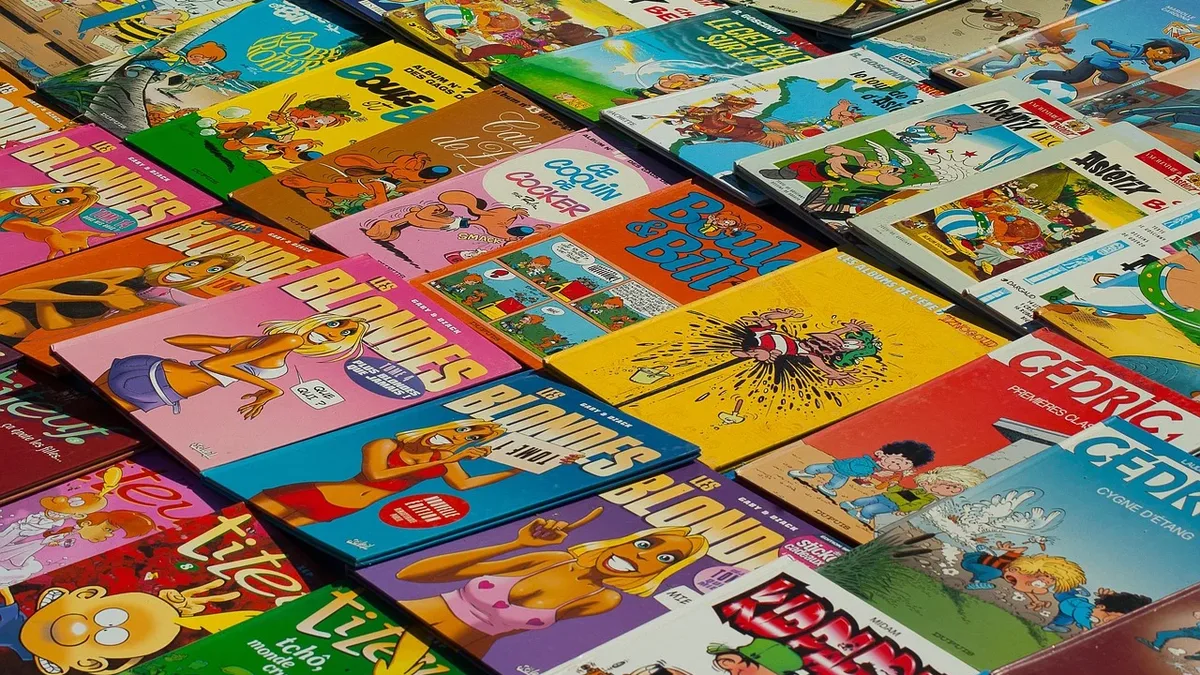
His reading journey included a deep dive into comics, inspired by Valérian by Jodorowsky and Moebius, Enki Bilal, and Akira by Katsuhiro Otomo. He later returned to comics after a long period focused on novels and essays. Recent reads include the "exceptional" La Bombe by Alcante and Bollée and graphic adaptations of Frankenstein and Dracula by Georges Bess.
His older brother guided him toward a more academic culture with a simple rule: for every classic he read, he could read a science fiction book. This introduced him to Victor Hugo, Balzac, and Stendhal. He read almost all of Stefan Zweig, and Albert Camus. Voltaire captivated him early through tales like Micromégas and Candide. "It was a language that fascinated me, funny, brilliant, and free," Malka recalled. "I understood that humor was an incredible instrument of conviction." He later had a Russian period with Gogol, Dostoevsky, and Tolstoy.
Mentors and Mandatory Reading
Two legal mentors profoundly influenced his reading. His first boss, lawyer and minister Georges Kiejman, was "voltairian" and recommended many books, including Joseph Kessel's Le Tour du malheur. The other was Robert Badinter. "At our first meeting, he drew up a list of books for me to read on the Shoah, a subject that never left him," Malka said. He named Primo Levi and Jorge Semprún as the two essential authors from that list, though he admitted finding such readings difficult and never finished Badinter's list.
Friend Philippe Val nourished his philosophical culture with Spinoza, Diderot, and Greek thinkers. Yet Malka's taste for stories drew him to mythology. "My bibles are The Iliad and The Odyssey," he stated. He called The Iliad the definitive book on the human condition. He also praised Christophe Ono-dit-Biot's L’odyssée de l’Odyssée. His great philosopher is Nietzsche, whose power of thought he finds "dizzying in its accuracy."
The Vital Link Between Reading, Writing, and Law
Reading is not only his oxygen but essential to his profession. "To be a good lawyer, you have to have lived, and failing that, you have to have traveled in passions through characters," Malka explained. He sees a legal plea as a construction, a narrative. "I always plead by telling a story."
Writing began for him around age 28, first with comics, which taught him concision. Later, writing novels gave him immense freedom in the courtroom. "It gave me confidence, allowed for audacity," he said. The influence went both ways; his legal career nourished his comic series L’ordre de Cicéron and his novel Tyrannie.
Being both a lawyer and a writer is a vital necessity for him, not only a desire. After writing essays on often heavy subjects, he needs to return to imagination, whether through comics or novels. "Writing novels is total freedom," he said. "There are no rules, you do what you want." He feels less free in comics due to the collaborative interpretation of an artist. His legal job then brings him back to earth, providing structure and demanding readiness.
His latest published book is Après Dieu, part of Stock's "Ma nuit au musée" series, recounting a night at the Panthéon with Voltaire. The book confronts the question of God. Malka does not evade it. "It's a question that becomes obsessive as the years go by, with the awareness of one's own finitude," he stated. He would find it comfortable to believe but cannot. He finds other possible sources of spirituality, such as in the atomic connections between all living things.